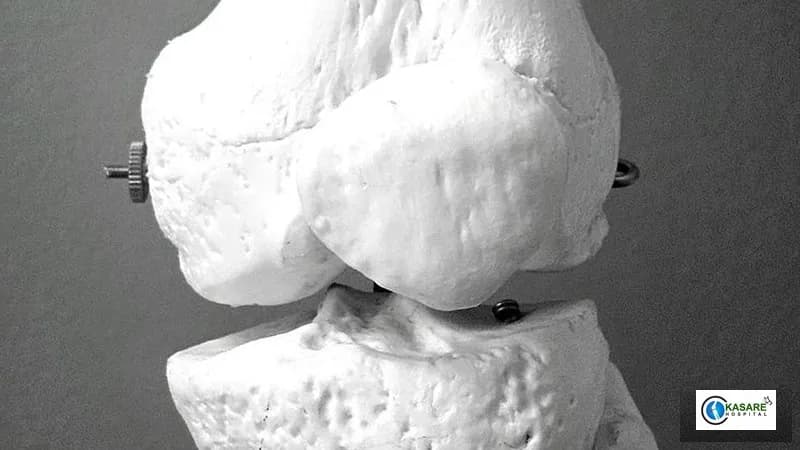
Osteoarthritis knee treatment options range from lifestyle changes and physiotherapy to surgical joint replacement, depending on the severity of cartilage damage. Osteoarthritis (OA) of the knee is a degenerative joint condition in which the protective cartilage covering the ends of the knee bones gradually wears away, causing pain, stiffness, and reduced mobility. At Kasare Hospital in Yavatmal, led by Dr. Prashant Kasare (MBBS, D Ortho), patients across Maharashtra receive personalised orthopaedic care — from early-stage management to advanced surgical intervention — under one roof.
Key fact: Knee osteoarthritis is a leading cause of chronic joint pain and disability in adults over 45, and is increasingly seen in younger individuals with prior knee injuries or obesity.
Recognising the early signs of knee osteoarthritis allows for timely intervention and better outcomes. Symptoms typically develop gradually and worsen with activity or prolonged inactivity.
| Symptom | Description |
|---|---|
| Knee pain | Aching or sharp pain during or after movement; worsens with stairs, squatting, or prolonged walking |
| Morning stiffness | Stiffness lasting up to 30 minutes after waking or after sitting for long periods |
| Swelling | Soft tissue swelling around the knee joint due to inflammation |
| Crepitus | Grinding, clicking, or crackling sensation when bending or straightening the knee |
| Reduced range of motion | Difficulty fully bending or straightening the knee; loss of flexibility over time |
| Joint instability | Feeling that the knee may give way, especially on uneven surfaces |
| Bony enlargement | Visible or palpable bony spurs (osteophytes) around the knee in advanced stages |
Knee osteoarthritis is classified into four stages based on the Kellgren-Lawrence grading system, which guides treatment decisions. Understanding the stage of your condition is essential for selecting the right osteoarthritis knee treatment option.
Clinical note: Staging is confirmed through weight-bearing X-rays and clinical assessment. An orthopaedic specialist can determine your stage and recommend the most appropriate treatment pathway.
Knee osteoarthritis develops when the cartilage that cushions the joint breaks down faster than the body can repair it. Several factors accelerate this process, making certain individuals more susceptible to joint pain and arthritis.
Accurate diagnosis of knee osteoarthritis involves a combination of clinical examination and imaging. At Kasare Hospital in Yavatmal, diagnostic imaging and lab tests are available on-site, enabling rapid assessment and treatment planning.
The orthopaedic specialist will assess your gait, range of motion, joint tenderness, and swelling during a physical examination. The following investigations are typically used:
Warning: Do not self-diagnose based on pain alone. Knee pain can result from multiple conditions including meniscus tears, bursitis, or referred pain from the hip. A confirmed diagnosis by an orthopaedic specialist is essential before starting any treatment.
The right osteoarthritis knee treatment option depends on the stage of the condition, the patient's age, activity level, and overall health. Treatment follows a stepwise approach — starting with conservative measures and progressing to surgical intervention when necessary. At Kasare Hospital, both non-surgical and surgical treatments are available under specialist care.
| Treatment | Best For | Recovery / Duration |
|---|---|---|
| Physiotherapy & exercise | Stage 1–2; all patients as baseline | Ongoing; improvement in 4–8 weeks |
| Weight management | Overweight patients at any stage | Ongoing lifestyle modification |
| Oral medications (NSAIDs, analgesics) | Stage 1–3; acute pain episodes | Short-term relief; not a long-term solution |
| Knee bracing & orthotics | Mild-to-moderate OA with instability | Immediate support; used long-term |
| Corticosteroid injections | Stage 2–3; significant inflammation | Relief for weeks to months |
| Hyaluronic acid (viscosupplementation) | Stage 2–3; inadequate steroid response | Relief for 3–6 months per cycle |
| Arthroscopy | Mechanical symptoms (locking, loose bodies) | Return to activity in 2–6 weeks |
| Total knee replacement | Stage 3–4; failed conservative treatment | Full recovery in 3–6 months |
Kasare Hospital performs total knee replacement and arthroscopy in an International Standard Modular Operation Theatre — the first of its kind in Yavatmal and third in Central India — ensuring the highest surgical standards. Patients seeking arthritis treatment in Maharashtra can access both surgical and non-surgical pathways at a single centre.
Not all knee pain requires immediate specialist attention, but certain thresholds indicate that a consultation with an orthopaedic specialist in Yavatmal should not be delayed.
Clinical note: Early-stage osteoarthritis responds well to non-surgical management. Delaying consultation until pain becomes severe limits treatment options and may make surgery unavoidable. Seeking assessment at Stage 1 or 2 offers the greatest range of conservative choices.
Kasare Hospital in Yavatmal offers a comprehensive, specialist-led pathway for patients with knee osteoarthritis — from initial diagnosis through to post-operative rehabilitation. Established in 2014, the hospital has served over 75,000 patients and completed more than 7,865 admissions and surgeries, with Dr. Prashant Kasare (MBBS, D Ortho) leading the orthopaedic team.
The hospital's International Standard Modular Operation Theatre — the first in Yavatmal and third in Central India — supports procedures including total knee replacement, arthroscopy, and minimally invasive joint surgery. For patients not yet requiring surgery, the team provides structured physiotherapy, injection therapy, and personalised osteoarthritis treatment plans tailored to each stage of the condition.
On-site diagnostics — including X-rays, imaging, and laboratory tests — enable same-visit assessment. The in-house pharmacy ensures immediate access to prescribed medications. Cashless insurance processing with authorised mediclaim providers and EMI options make joint pain relief in Yavatmal accessible to patients across the region.
For patients with advanced OA requiring hip replacement or bilateral joint procedures, the same surgical team and facility standards apply. NABH-standard protocols are followed across all clinical pathways.
Book a consultation at Kasare Hospital
Use the booking form on this page, or reach out directly:
Call: +91 9823112882
WhatsApp: 9823112882



Quick Links
Our Resources
Our Services