
A practical, no-nonsense guide to what drives the cost of total knee replacement and how to plan for it financially.
By Dr. Prashant Kasare, Kasare Hospital
In my fifteen-plus years of treating knee pain, one question comes up almost as often as 'will I need surgery?' — and that is 'how much will it cost?' This is a fair question. A total knee replacement (TKR) is a significant decision, both medically and financially, and most patients want clarity before they commit. This article breaks down the real factors that influence knee replacement cost, how insurance typically works for this procedure, and what to actually ask your hospital before scheduling surgery. It is written to help you plan, not to alarm you — knee pain that limits daily life, especially from osteoarthritis, is very treatable, and most patients return to a far more active life after recovery.
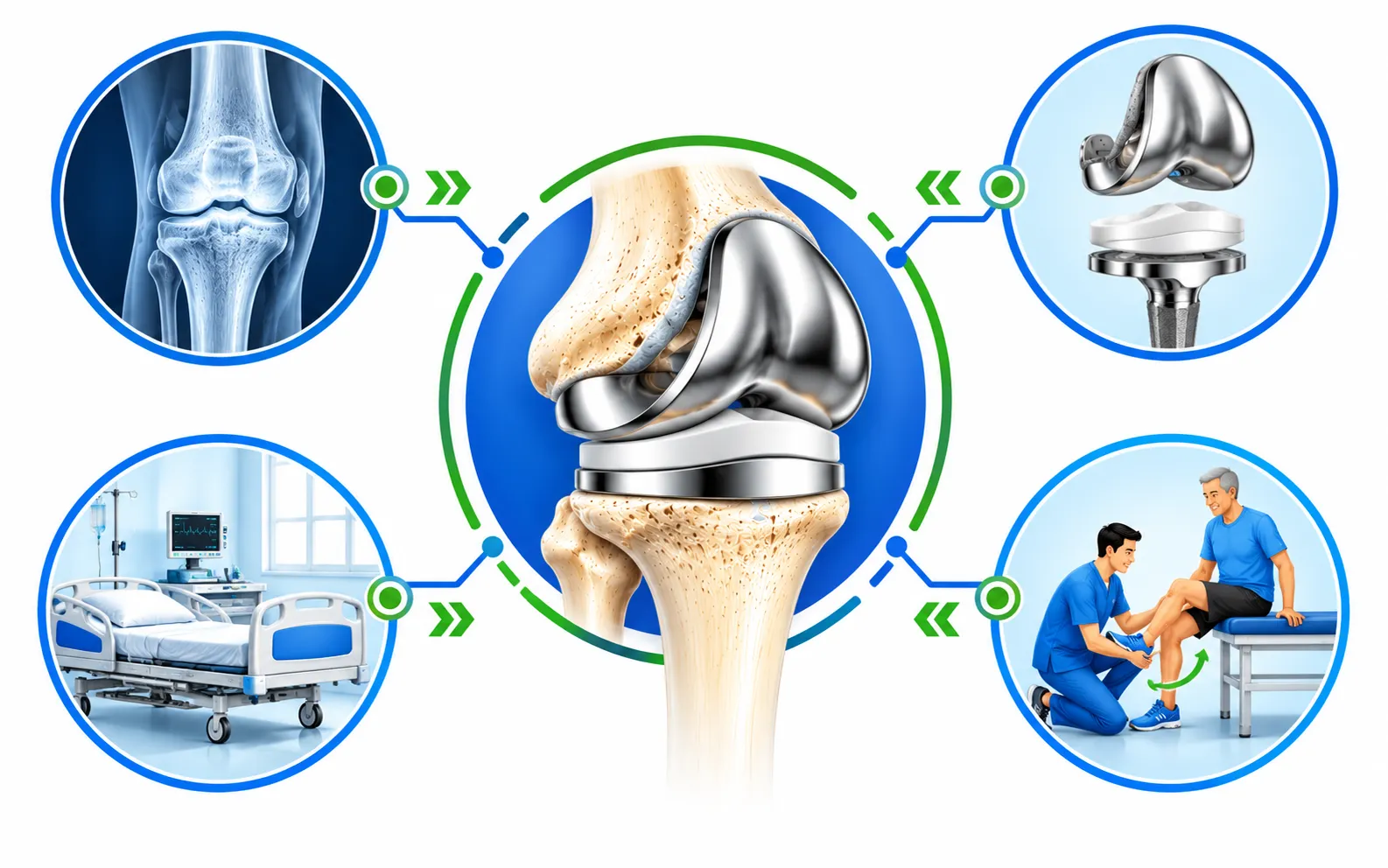
No two knee replacement cases are identical, which is why no hospital — including ours — can quote a fixed, one-size-fits-all number without first examining the patient. The cost is shaped by a combination of clinical and logistical factors:
Severity and stage of joint damage: Early arthritis may still respond to conservative treatment or minimally invasive options such as arthroscopic surgery, while advanced bone-on-bone arthritis usually requires full joint replacement.
Implant type: Knee implants vary by material, design, and expected longevity. The surgeon recommends the implant best suited to the patient's age, activity level, and bone quality.
Unilateral vs. bilateral surgery: Replacing one knee versus both knees (either simultaneously or in a staged approach) significantly changes operating time, hospital stay, and rehabilitation needs.
Pre-operative diagnostics: Digital X-rays, blood work, cardiac fitness, and anesthesia clearance are essential before any joint replacement and form part of the overall cost.
Length of hospital stay: This depends on the patient's recovery pace, any comorbidities (such as diabetes or hypertension), and how quickly mobility milestones are met.
Post-operative physiotherapy: Structured rehabilitation is not optional after a knee replacement — it is central to a good outcome, and its duration and intensity affect overall cost.
Surgeon's experience and surgical setting: Surgery performed in a well-equipped, accredited operation theatre with image-guided tools typically has different cost structuring than a more basic setup.
Tip: Always ask for a personalised, written cost estimate after your clinical evaluation rather than relying on a number you've heard elsewhere — implant choice and health status can change the figure meaningfully.
Patients with arthritis in both knees often ask whether to treat one knee at a time or both together. Here is how the two approaches generally compare:
| Factor | Unilateral (One Knee) | Bilateral (Both Knees) |
|---|---|---|
| Surgery duration | Shorter, single procedure | Longer if done simultaneously, or staged over two sessions |
| Hospital stay | Typically shorter | Usually longer, more closely monitored |
| Rehabilitation intensity | One leg to mobilise and strengthen | Both legs recovering together, needs more support initially |
| Who it suits | One knee significantly worse than the other | Both knees equally affected, patient fit for a longer procedure |
The right approach is decided jointly between the surgeon and patient after a full clinical and fitness assessment — there is no universally 'cheaper' or 'better' option for everyone.
At Kasare Hospital, every knee replacement is performed by Dr. Prashant Kasare, a Consultant Orthopaedic Surgeon with fellowship training in joint replacement surgery and over 15 years of clinical experience, including training exposure at leading centres such as RML Hospital, AIIMS, and Lilavati Hospital. Surgeries are carried out in our International Standard Modular Operation Theatre — the first of its kind in Yavatmal and third in Central India — supported by digital X-ray and C-arm image intensifier technology that helps with accurate implant positioning during surgery. Our advanced diagnostic and surgical technology is paired with in-house physiotherapy and rehabilitation facilities, so your recovery plan continues seamlessly under the same roof where you were operated on. As orthopaedic specialists in Yavatmal, our team follows NABH-standard protocols and an ethical, transparent counselling approach — you will be told honestly whether you need surgery at all, and if you do, exactly what the procedure, hospital stay, and recovery will involve before you decide anything.
Total knee replacement is a well-recognised surgical procedure and is covered under most standard health insurance policies in India, subject to the terms of your specific plan. Before your surgery date is confirmed, it is worth doing the following:
Check whether your policy covers orthopaedic/joint replacement surgery and whether there is a waiting period for pre-existing conditions like arthritis.
Confirm whether your insurer offers a cashless facility or requires reimbursement after you pay and submit bills.
Ask your hospital's billing desk to help with pre-authorisation paperwork — most insurers require this before a planned (non-emergency) surgery.
Keep all prescriptions, diagnostic reports, and prior consultation records organised, as insurers typically ask for a documented treatment history.
Clarify what is and isn't included — implant cost, room category limits, and post-operative physiotherapy sessions can sometimes have separate sub-limits.
Our team follows the same quality care protocols for every patient, insured or otherwise, and will guide you through documentation requirements as part of your treatment plan.
Most patients begin walking with support within a day or two of surgery and progress to independent walking over the following weeks, with full recovery typically continuing over two to three months depending on age, fitness, and adherence to physiotherapy. The quality of your post-operative rehabilitation directly affects both your functional outcome and your total cost of care, since complications from inadequate rehabilitation can mean additional visits or extended therapy.
Warning: Seek immediate medical attention after knee surgery if you notice sudden severe swelling, redness or warmth around the knee, fever, persistent chest pain, or breathlessness — these can indicate infection or a blood clot and should never be ignored.
Cost should never be the only factor in deciding where and when to have knee replacement surgery — but it should never be a mystery either. A good orthopaedic team will walk you through your clinical findings, explain whether surgery is actually necessary, and give you a transparent, itemised estimate before you make a decision. Learn more about Kasare Hospital and our approach to affordable, world-class orthopaedic care in Yavatmal, or contact our team to schedule a consultation and get a personalised cost estimate for your knee.