
A practical, no-nonsense guide to understanding hip replacement surgery, its cost factors, and recovery — from the orthopaedic team at Kasare Hospital, Yavatmal.
By Dr. Prashant Kasare, Kasare Hospital
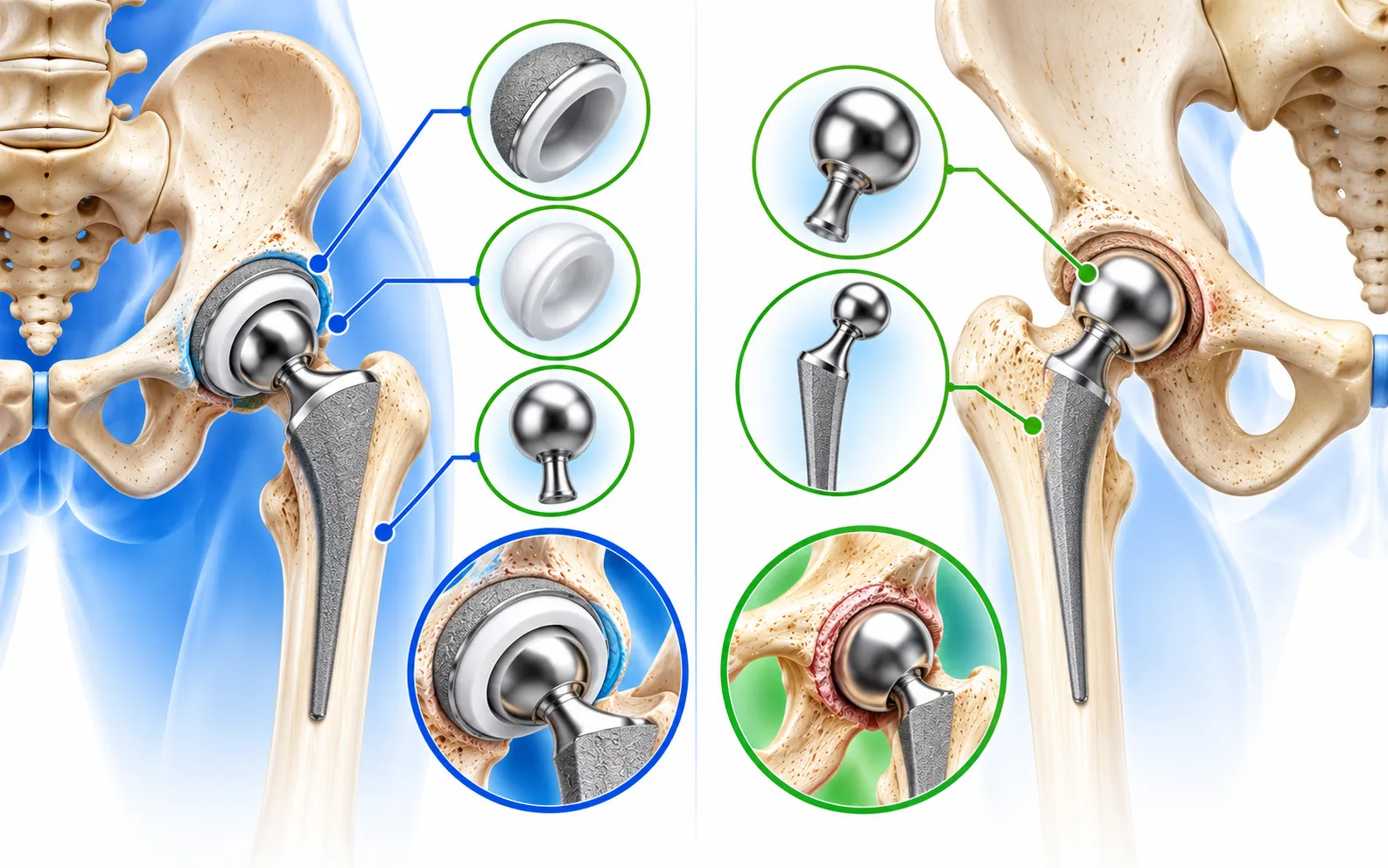
Hip replacement surgery (also called hip arthroplasty) involves removing a damaged or worn-out hip joint and replacing it with an artificial implant made of metal, ceramic, or high-grade plastic components. The goal is simple but life-changing: relieve pain, restore mobility, and let patients get back to walking, climbing stairs, and daily activities without the grinding discomfort of a diseased joint. Over the years in my practice in Yavatmal, I've seen patients delay this decision far longer than necessary, often out of fear or uncertainty about cost and recovery. This guide answers the questions patients and families most commonly ask me during consultations.
At Kasare Hospital, every hip replacement surgery is performed with a structured, step-by-step approach — from diagnosis and pre-operative planning through surgery and supervised rehabilitation — so patients know exactly what to expect at each stage.
Not every hip pain needs surgery, and that's an important first point. Hip replacement is typically recommended when conservative treatments — medication, physiotherapy, lifestyle modification, and injections — no longer control the pain or restore function. The most common underlying causes I see at my clinic in Yavatmal include:
Advanced osteoarthritis of the hip joint, where the protective cartilage has worn away, causing bone-on-bone friction
Rheumatoid arthritis affecting the hip joint lining
Avascular necrosis, where blood supply to the femoral head is disrupted and the bone begins to collapse
Severe hip fractures in older adults, particularly femoral neck fractures that cannot be adequately fixed with screws or plates
Hip dysplasia or childhood hip conditions that lead to early degeneration in adulthood
Warning signs worth discussing with our orthopaedic specialists in Yavatmal include persistent groin or thigh pain, stiffness that limits putting on socks or shoes, a noticeable limp, and pain that disturbs sleep or doesn't ease with rest. If a fall or accident has caused sudden, severe hip pain with inability to bear weight, this needs urgent evaluation rather than a routine appointment — our hip fracture care pathway is designed for exactly this kind of emergency presentation.
Diagnosis begins with a detailed clinical examination — assessing gait, range of motion, and pain patterns — followed by imaging. Standard X-rays usually confirm joint space narrowing, bone spurs, or fracture lines, and in select cases further imaging or blood investigations help rule out infection or inflammatory arthritis. On-site diagnostic imaging and digital X-ray at Kasare Hospital mean patients don't need to travel elsewhere for reports, which matters a great deal when someone is in pain and mobility is already limited.
Tip: Bring any earlier X-rays, scan reports, and your insurance or Ayushman Bharat card to your first consultation — it helps us assess your joint history faster and discuss cashless options for hip replacement with insurance in the same visit.
Depending on how much of the joint is damaged, your surgeon may recommend a total or a partial (hemi) hip replacement. Here's how the two compare:
| Factor | Total Hip Replacement | Partial Hip Replacement |
|---|---|---|
| What's replaced | Both the femoral head and the hip socket (acetabulum) | Only the femoral head |
| Typically used for | Osteoarthritis, rheumatoid arthritis, severe joint degeneration | Certain hip fractures in elderly patients, especially with lower activity levels |
| Surgical duration | Generally longer | Generally shorter |
| Long-term outcome | Durable pain relief across both joint surfaces | Good for lower-demand patients; socket may still wear over time |
The right choice depends on your age, bone quality, activity level, and the extent of joint damage seen on imaging — this is decided jointly with you after a thorough assessment, not applied as a one-size-fits-all protocol.
I trained in hip joint replacement under Dr. A. V. Guravareddy in Hyderabad, alongside fellowship training in foot & ankle and hand surgery, and I've carried that training into building Kasare Hospital's orthopaedic programme over the last 15+ years. A few things set our setup apart for patients in Yavatmal and the surrounding region:
An International Standard Modular Operation Theatre — the first of its kind in Yavatmal and third in Central India — built to the same surgical standards as larger metro hospitals
Advanced orthopaedic technology including digital X-ray and C-arm image intensifier guidance, which supports precise implant positioning during surgery
In-house pharmacy, diagnostic imaging, and lab testing, so pre-operative workup and post-operative care happen without referrals to outside centres
Care delivered under NABH-standard quality protocols, reinforcing consistent surgical safety practices
Integrated physiotherapy and rehabilitation support, so recovery guidance continues right from the ward into outpatient follow-up
Since opening in 2014, Kasare Hospital has treated over 75,000 patients and completed more than 7,865 admissions and surgeries — experience that matters when it comes to managing the small but real complications that can arise around any major joint surgery.
One of the most common searches we see is for hip replacement package price in Yavatmal — and the honest answer is that no responsible surgeon can quote a fixed figure before examining you. The final cost depends on several factors: the type of implant used (standard vs. uncemented or ceramic options), whether it's a total or partial replacement, length of hospital stay, anaesthesia requirements, any pre-existing conditions needing additional management, and post-operative physiotherapy needs. What we can tell you is that Kasare Hospital was founded with a stated mission of delivering world-class healthcare at an affordable cost, and every patient receives a transparent, itemised estimate before admission — never a surprise bill.
For patients asking about hip replacement with cashless insurance in Yavatmal, our billing team helps verify your policy coverage and guides you through the cashless approval process with your insurer ahead of surgery wherever possible. Orthopaedic doctor consultation fees are kept reasonable and are confirmed at the time of booking your appointment, so there's clarity from the very first visit.
If you've been living with hip pain and want a clear, honest opinion on whether surgery is the right next step, here's how to get started:
Call or visit Kasare Hospital at Shivaji Nagar Road, Near Shivaji Park, Yavatmal, Maharashtra 445002 to schedule an orthopaedic consultation
Bring previous X-rays, scan reports, and a list of current medications
Carry your insurance card or details for cashless pre-authorisation, if applicable
Meet our orthopaedic doctors for a hands-on clinical assessment and imaging review
Discuss treatment options, timelines, and cost estimates in the same visit
You can also contact Kasare Hospital directly to check appointment availability before planning your visit.
Most patients begin assisted walking with a walker within a day or two of surgery, with physiotherapy introduced early to rebuild strength and range of motion. Hospital stay typically runs a few days depending on the individual's recovery pace and any pre-existing conditions. Over the following six to twelve weeks, patients progressively move from walker to cane to independent walking, with physiotherapy exercises continuing throughout. Full return to daily activities, including driving and longer walks, generally happens within three months, though complete bone-implant integration continues for longer.
Warning: Seek immediate medical attention if you notice fever, redness or discharge at the surgical site, sudden calf swelling or pain, chest pain, or breathlessness after hip replacement surgery — these can indicate infection or a blood clot and need urgent evaluation, not a scheduled follow-up.
Is hip replacement surgery painful? Modern anaesthesia and pain management protocols keep discomfort well controlled during and after surgery; most patients describe post-operative pain as manageable rather than severe.
At what age is hip replacement usually done? While most commonly performed in patients over 50, it's recommended based on joint damage and functional impact rather than age alone — younger patients with severe arthritis or avascular necrosis may also be candidates.
How long does a hip implant last? Modern implants commonly last 15 to 20 years or more, though this varies with activity level, body weight, and implant type.
If you're still unsure whether surgery is right for you, the safest next step is a direct clinical consultation rather than relying on general information online — every hip joint tells a slightly different story on imaging and examination.